
How Professional Mold Inspectors Find Hidden Mold
Most mold problems don't start with a visible patch on the wall. They start behind it inside a wall cavity, under a subfloor, tucked into ductwork. By the time you can see the mold, it's often been growing for weeks or months. That's why a professional mold inspection isn't just a visual check. It's a diagnostic process that uses specialized tools to find moisture and mold before they show themselves.
Here's what that process actually looks like at Arrow.
Why Hidden Mold Is So Easy to Miss
Mold needs two things to grow: organic material and moisture. Your home has plenty of both. Drywall, wood framing, and insulation are all food sources and small leaks, high humidity, or a single water event can provide enough moisture to get things started. The problem is that these conditions often exist in spaces that aren't regularly seen or checked. A slow leak inside a wall won't cause visible damage right away. A humid crawlspace might not smell from inside the house. Standard visual inspections can walk right past these areas without any indication that something is wrong.
The Tool That Finds Moisture Before Mold Grows
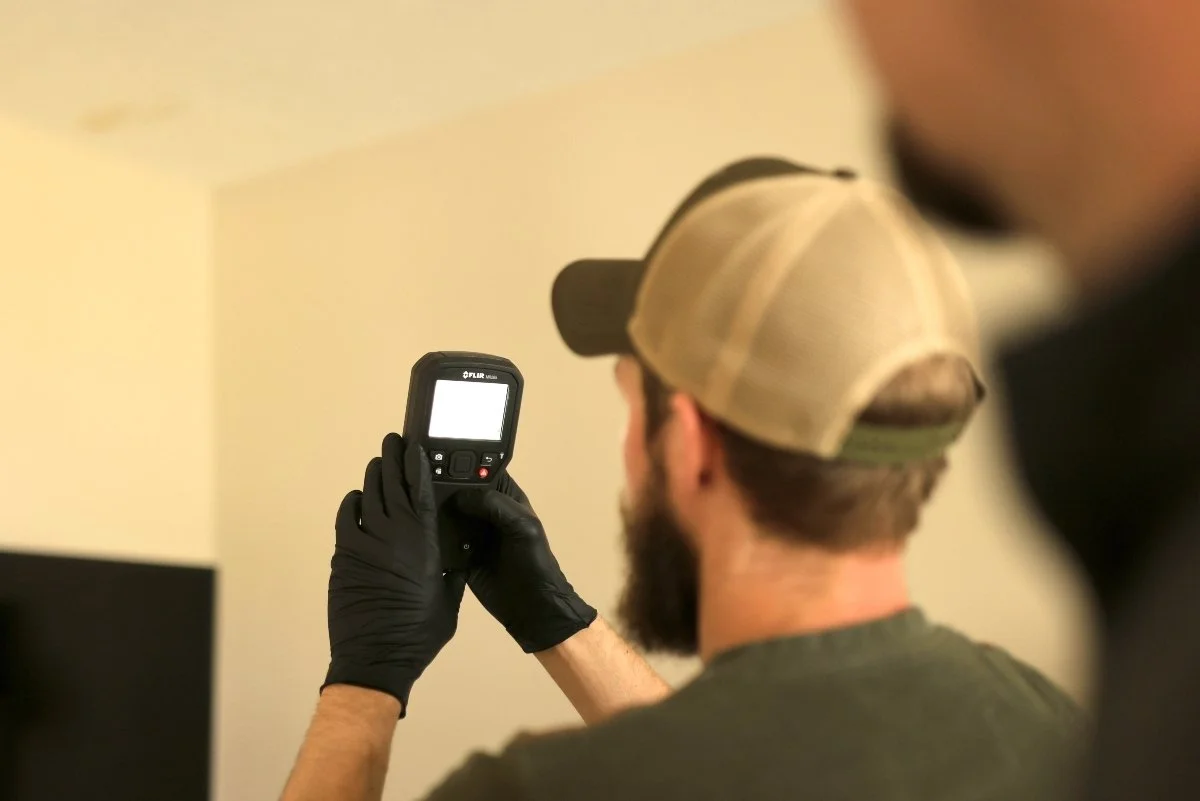
A moisture meter is the starting point of most inspections. It reads the moisture content of building materials: drywall, wood flooring, framing, subfloors, and flags areas where levels are elevated. High moisture doesn't always mean mold is present yet, but it does mean conditions are right for it to develop. Finding those spots early is often the difference between a simple fix and a full remediation.

How Thermal Imaging Sees Through Walls
An infrared camera detects temperature differences on surfaces. Because moisture affects how quickly a material heats and cools, a wet area inside a wall will show up as a distinct temperature pattern on the camera's screen (even when the wall surface looks completely normal). This lets inspectors identify moisture intrusion without opening up walls or doing any structural work. It's one of the most useful tools in the kit because it covers large areas quickly and surfaces problems that would otherwise stay hidden.

What an Endoscope Camera Makes Possible
Sometimes thermal imaging points to a specific area that needs a closer look. An endoscope camera can be inserted through a small access point to get a direct visual inside wall cavities, duct systems, or crawlspaces. It's how inspectors confirm what's actually there before recommending next steps. The alternative is cutting open walls to look, which is far more disruptive and expensive.
Air and Swab Sampling: Confirming What the Tools Find
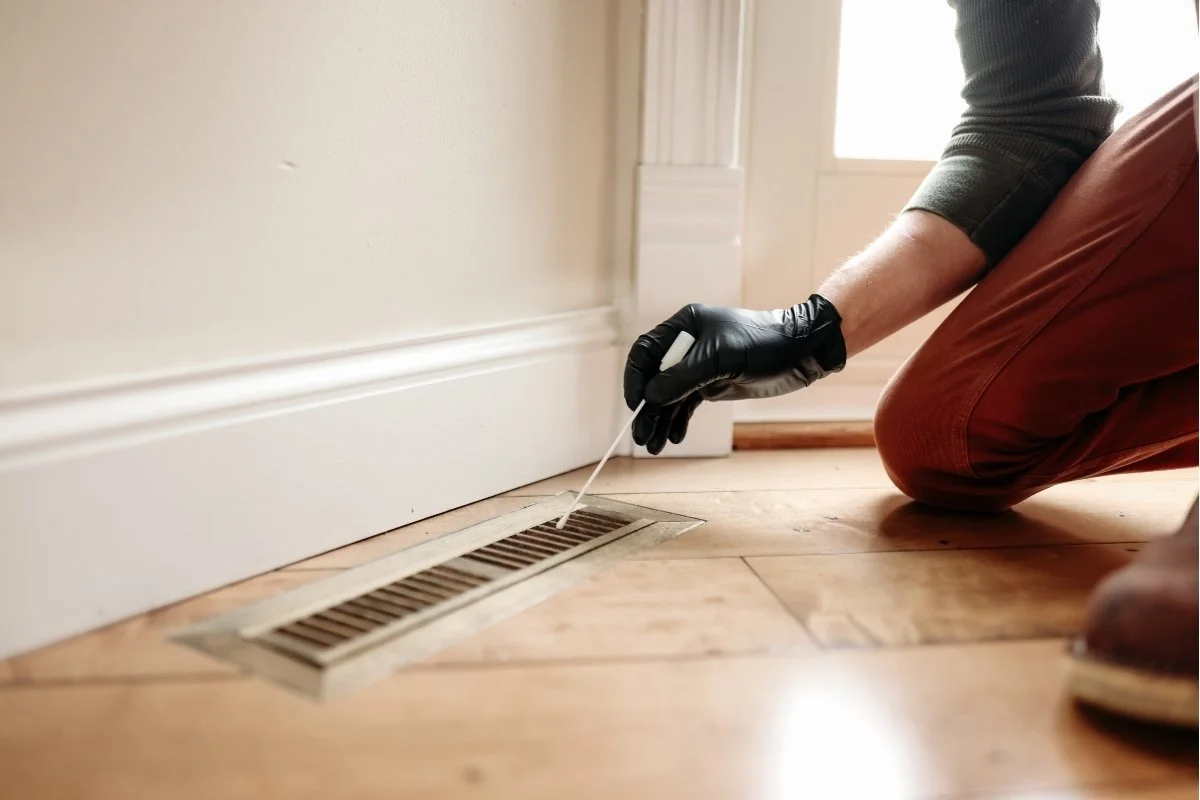
Once a problem area is identified the next step is testing. Air samples capture what's circulating through the space, this is useful for understanding whether mold spores are present in the air even when the source isn't visible yet. Swab samples pull directly from a surface to identify exactly what's growing there. Both types go to a lab, which returns a report showing the mold species present and the concentration levels. That report is what drives the remediation plan and gives homeowners documentation of the issue.
Why the Scope of Testing Matters
A single air sample pulled from one room in a house can technically qualify as a mold inspection. It's also not very useful. Mold doesn't stay in one room. Spores move through HVAC systems, travel along air currents, and originate from sources that a single sample can't locate. A thorough inspection tests multiple areas, uses multiple methods, and gives you a complete picture of the home, not just confirmation that mold exists somewhere. The goal is to find where it's coming from so it can actually be fixed.
What to Expect from an Arrow Inspection
Arrow inspections combine moisture readings, thermal imaging, endoscope access where needed, and air and swab sampling into a single appointment. You get a full written report with lab results, a clear explanation of what was found, and guidance on what to do next. If you've had water damage, noticed musty smells, or are buying or selling a home, a full inspection gives you real answers instead of guesswork.
Ready to find out what's actually going on in your home?
